
Why We Romanticize the Lives of Strangers Online
By Neo Max on July 3, 2026
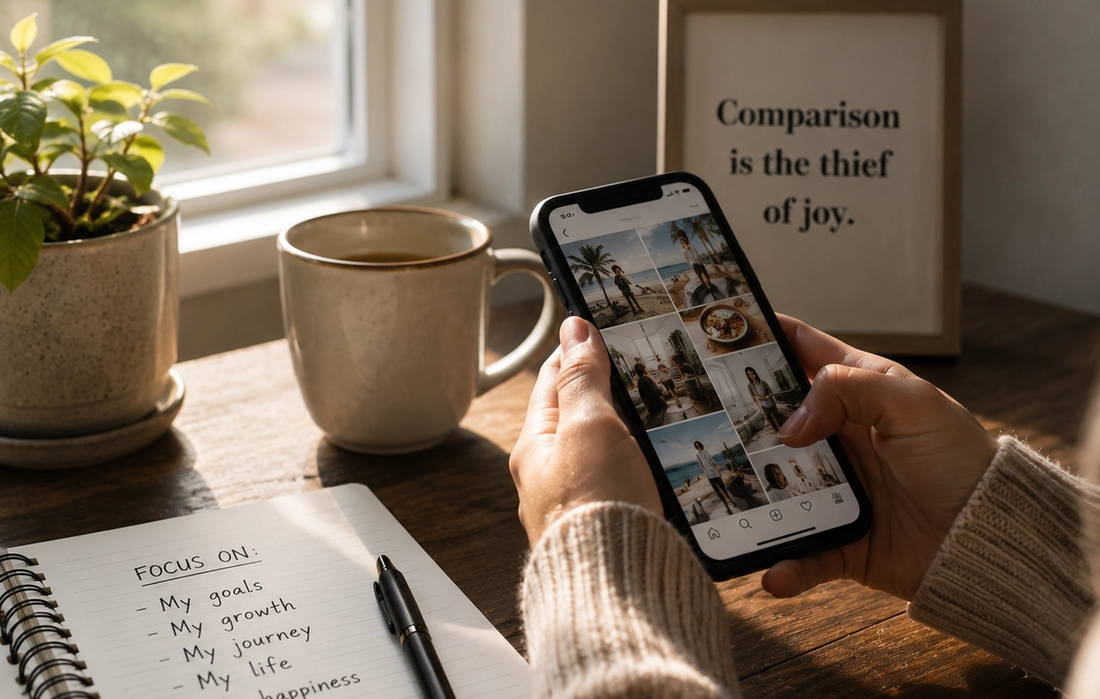
It’s become surprisingly easy to feel as though complete strangers have better lives than we do.
A few minutes on social media can leave us convinced that someone else has the perfect relationship, dream career, beautiful home, effortless style, or exciting social life. We watch carefully edited videos of morning routines, luxury holidays, spotless kitchens, successful businesses, and smiling families, often forgetting that we’re seeing only a tiny fraction of someone else’s reality.
This habit of idealizing strangers isn’t new, but the internet has made it more powerful than ever.
With constant access to carefully curated snapshots of other people’s lives, it’s natural to fill in the missing details ourselves. Unfortunately, our imagination is often much kinder to other people than it is to us.
We see the highlights, not the whole story
One of the biggest reasons we romanticize strangers online is that we rarely see ordinary life.
Most people don’t post arguments with their partner, stressful workdays, financial worries, health problems, or the hours spent cleaning the house before taking the perfect photograph.
Instead, they share celebrations, achievements, beautiful meals, holidays, and carefully chosen moments that represent the best parts of their lives.
There’s nothing wrong with wanting to share positive experiences.
The problem begins when we mistake those highlights for someone’s complete reality.
Comparing our everyday lives with another person’s highlight reel almost always creates an unfair comparison.
Our brains naturally fill in the gaps
Humans are storytellers by nature.
When information is missing, our brains instinctively complete the picture. If someone posts photos from beautiful destinations, we may assume they’re always travelling. If their home looks immaculate, we imagine it always stays that way. If they appear confident on camera, we assume they never experience insecurity.
In reality, we know very little about the parts of their life that never appear online.
Those missing details are often where real life happens.
The stories we create about strangers usually reveal more about our own hopes and assumptions than about the people we’re watching.
Familiarity changes how we judge ourselves
We’re intimately familiar with our own lives.
We know our mistakes, doubts, unfinished goals, and moments of uncertainty because we experience them every day. Other people’s lives, however, remain largely mysterious.
This creates an imbalance.
We compare our complete reality—including all of its ordinary moments—to carefully selected glimpses of someone else’s life. Naturally, the comparison feels unfair.
It’s difficult to compete with a version of someone that exists mostly in our imagination.
Aesthetic content makes ordinary life look extraordinary
Social media doesn’t simply show events—it presents them beautifully.
Thoughtful lighting, careful editing, attractive music, flattering angles, and well-designed spaces can transform even simple activities into something that feels aspirational.
Making coffee becomes cinematic. Reading a book appears deeply meaningful. Working from home looks effortlessly organized. A walk through the park resembles a scene from a film.
These moments may well be genuine.
But the way they’re presented often encourages us to believe that someone else’s everyday life is more exciting, peaceful, or fulfilling than our own.
Presentation has enormous influence over perception.
We often project our own dreams
Sometimes what attracts us isn’t another person’s actual life.
It’s what we imagine their life represents.
A travel influencer may symbolize freedom. Someone renovating a home may represent stability. A successful entrepreneur might reflect independence. A beautifully organized kitchen may symbolize calm and control.
We’re often responding less to the person themselves and more to the emotions their content evokes.
Recognizing this can be surprisingly helpful.
Instead of asking why someone else’s life seems so appealing, we can ask what that feeling reveals about our own priorities and aspirations.
Comparison can quietly reduce gratitude
Spending too much time idealizing strangers often changes how we view our own lives.
Ordinary routines begin to feel boring. Familiar places seem less interesting. Achievements lose some of their excitement because someone else appears to have accomplished more.
Yet many of the things we overlook in our own lives would seem extraordinary to someone else.
Close friendships, family dinners, stable routines, meaningful work, good health, or peaceful evenings at home rarely attract millions of views online—but they often contribute far more to long-term happiness than constant excitement.
Gratitude becomes difficult when comparison becomes a daily habit.
Real connection happens beyond the screen
Ironically, we can spend hours learning about strangers while spending less time connecting with the people closest to us.
Watching someone else’s holiday isn’t the same as planning one with friends. Following someone’s daily routine isn’t the same as creating habits that improve your own life. Admiring someone else’s relationships isn’t the same as investing in your own.
Social media can inspire us, but it should never replace real experiences.
The most meaningful moments in life are usually the ones we participate in—not simply observe.
Use inspiration without losing perspective
There’s nothing wrong with enjoying beautiful content.
Many creators genuinely educate, motivate, or inspire their audiences. Their work can encourage healthier habits, introduce new ideas, or simply brighten someone’s day.
The key is remembering that every online account represents only a carefully selected window into someone’s life.
No photograph, short video, or perfectly edited morning routine tells the whole story.
Keeping that perspective allows inspiration to remain positive rather than turning into unhealthy comparison.
Your ordinary life deserves your attention too
The internet has made it possible to witness countless extraordinary moments every single day.
While that’s remarkable, it also makes it easy to overlook the value of our own everyday experiences.
The quiet morning coffee, the conversation with a friend, the familiar walk through your neighbourhood, the meal shared with family, or the book you read before bed may never go viral—but they often become the moments that quietly shape a meaningful life.
Perhaps the greatest challenge isn’t learning to stop admiring other people’s lives.
It’s learning to see the beauty in our own.
Because behind every carefully curated online profile is a real person with ordinary days, difficult moments, and challenges we’ll never fully see. Remembering that allows us to appreciate social media for what it is: a collection of moments, not a complete picture of anyone’s life—including our own.









MORE IN TRENDING
How to Find Your Personal Style in 6 Steps
Sam Bitton .

How to Spot a Beauty Product That’s Actually Worth the Hype
Adi Liad .
The Privacy Settings Worth Changing on Every Device You Own
Roy Kaden Roi .

How to Spend Less Time on Your Phone Without Going Off-Grid
Roy Kaden Roi .

The Digital Habits of People Who Seem Calm Online
Jade Josef .